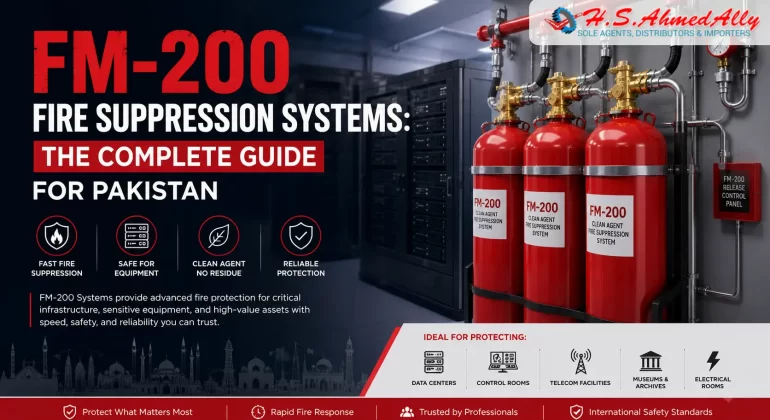

Fire is unpredictable. It can start in seconds. It can destroy years of work in minutes. That is why more businesses in Pakistan are turning to FM-200 fire suppression systems.
This guide explains what FM-200 is. It explains how it works. It also explains why so many industries trust it. By the end, you will understand if FM-200 is right for your facility.
What Is FM-200?
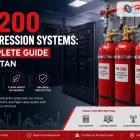
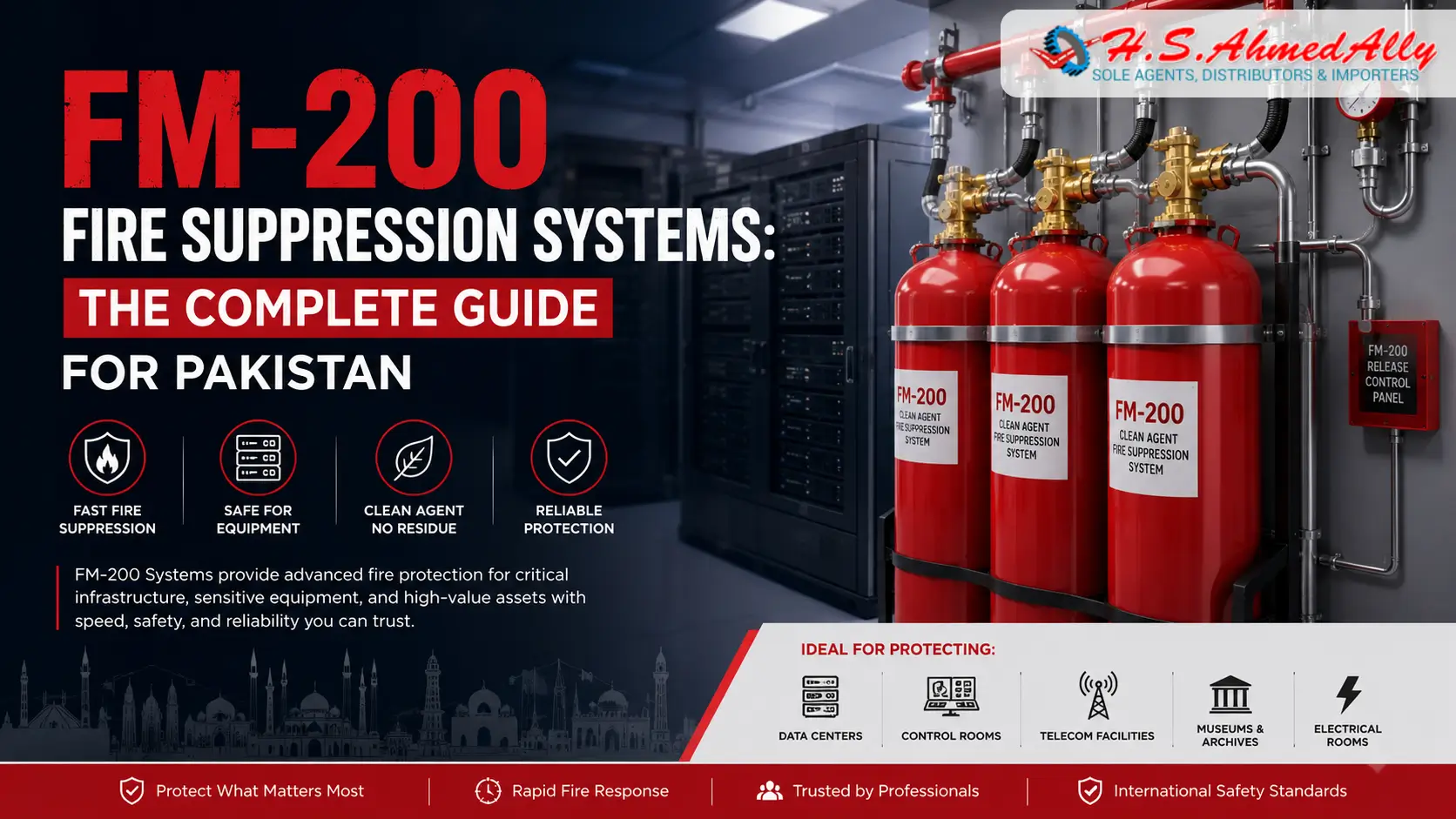
FM-200 is a clean agent fire suppressant. Its technical name is HFC-227ea. Some suppliers, like HS Ahmed Ally, market this system under the brand name like Firex 200 system. The gas inside is the same. Only the brand name changes.
FM-200 fights fire without water. It fights fire without foam. It fights fire without leaving a mess behind. This makes it one of the most trusted fire suppression agents in the world today.
It is colorless. It is odorless. It does not conduct electricity. This makes it safe to use around sensitive equipment.
How Does FM-200 Work?
Fire needs three things to survive. It needs heat. It needs fuel. It needs oxygen. Remove one of these, and the fire dies.
FM-200 works differently than water or foam. It does not remove oxygen from the room. Instead, it absorbs heat at a molecular level. This breaks the chemical chain reaction that keeps a fire burning.
The result is fast fire suppression. Most FM-200 systems extinguish a fire in ten seconds or less. This speed matters. It protects equipment before serious damage happens.
Why Businesses Choose FM-200 Over Other Systems
Every fire suppression method has trade-offs. Here is why FM-200 stands out.
1. No Water Damage
Water sprinklers put out fire. But they also destroy servers, documents, and machinery. FM-200 leaves no residue. It leaves no water damage. Your equipment stays dry and functional after use.
2. Safe for Occupied Spaces
Some fire suppression gases lower oxygen levels. This can be dangerous for people in the room. FM-200 is designed to be used at concentrations safe for humans. This makes it ideal for offices, control rooms, and server rooms where staff may be present.
3. Environmentally Responsible
FM-200 has zero ozone depletion potential. It also has a short atmospheric lifetime. This means it breaks down quickly and does not linger in the environment. For businesses that care about sustainability, this matters.
4. Halon Replacement
Halon 1301 was once the gold standard for fire suppression. But Halon damages the ozone layer. Most countries have phased it out. FM-200 was developed as a direct replacement. It offers similar performance without the environmental harm.
5. Certified and Trusted
Look for systems certified by BSI and VDS. These certifications confirm the system meets strict international safety standards. The Firex FM 200 system carries both certifications.
Where Is FM-200 Used?
FM-200 fire suppression systems protect many types of spaces. Here are the most common applications.
Data Centers and Server Rooms
Servers are expensive. Downtime is costly. A single fire can wipe out critical data and hardware. FM-200 protects servers without damaging circuit boards or hard drives. This is why almost every modern data center uses clean agent suppression. Learn more about this in our previous guide of fire suppression systems for IT server rooms.
Electrical Switchgear and Control Rooms
Control rooms often run critical operations around the clock. A fire here can shut down an entire facility. FM-200 protects switchgear panels and control systems without conducting electricity or causing corrosion.
Museums, Archives, and Record Rooms
Some things cannot be replaced. Historical documents. Rare artifacts. Legal records. Water and foam would ruin these items permanently. FM-200 suppresses fire while keeping paper, artwork, and archives intact.
Industrial Facilities with Flammable Liquids
Factories and warehouses that store flammable liquids face high fire risk. FM-200 is effective against Class B fires involving liquids and gases. It suppresses fire quickly, reducing the chance of explosion or spread.
Telecom Rooms and Equipment Cabinets
Telecom infrastructure runs nonstop. A fire in an equipment cabinet can disrupt communication networks across a wide area. FM-200 protects this equipment without shutting down nearby systems.
It is worth noting that FM-200 is not the right fit for every fire risk. Commercial kitchens, for example, face grease and cooking oil fires that need a different type of system entirely. If you run a restaurant or commercial kitchen, read our guide to kitchen fire suppression systems to find the right protection for that environment.
FM-200 vs Other Fire Suppression Systems
Choosing the right system depends on your space and your risk profile. Here is a simple comparison.
FM-200 vs Water Sprinklers Sprinklers are cheap and common. But they damage electronics. FM-200 costs more upfront but protects sensitive equipment far better.
FM-200 vs CO2 Systems CO2 systems remove oxygen to stop fire. This makes them dangerous for occupied spaces. FM-200 is safer for rooms where people may be present during discharge.
FM-200 vs Novec 1230 Novec 1230 is a newer clean agent. It has an even shorter atmospheric lifetime. However, FM-200 remains widely available, well understood, and often more cost-effective for many facilities in Pakistan.
FM-200 vs Dry Chemical Powder Powder systems leave behind a fine residue. This residue can damage electronics and require expensive cleanup. FM-200 leaves nothing behind.
How an FM-200 System Is Designed
Every FM-200 installation starts with room measurements. The volume of the protected space determines the amount of agent needed. Engineers also calculate:
- The size and number of storage cylinders
- Pipe network layout for even gas distribution
- Nozzle placement for full room coverage
- Detection and alarm integration
A poorly designed system will not suppress fire effectively. This is why working with an experienced supplier matters. Design mistakes can mean the difference between a contained fire and a total loss.
Maintenance: Keeping Your FM-200 System Ready
An FM-200 system is only useful if it works when needed. Regular maintenance keeps it reliable.
Routine Inspection
Cylinders should be checked for pressure levels. Low pressure can mean a leak. Leaks reduce suppression effectiveness.
Weighing Cylinders
Technicians periodically weigh cylinders to confirm the agent has not leaked out. Even small losses can affect performance.
Testing Detection Systems
The fire detection and alarm system must trigger the FM-200 release correctly. Regular testing confirms this connection works.
Recharge After Discharge
Once a system discharges, it must be recharged before it can protect the space again. Delaying this leaves your facility vulnerable.
A missed inspection can lead to system failure during a real emergency. Set a maintenance schedule and stick to it.
Signs You Need to Upgrade or Service Your System
Watch for these warning signs.
- Your system is over ten years old
- You have expanded or changed the protected room
- You notice unusual hissing sounds near cylinders
- Pressure gauges show inconsistent readings
- Your facility has grown and needs more coverage
If any of these apply, contact a fire safety provider for an inspection.
Choosing the Right FM-200 Supplier in Pakistan
Not all suppliers offer the same quality. Ask these questions before choosing one.
Is the system certified? Look for BSI and VDS certification. These confirm international quality standards.
Do they offer design and installation together? A supplier who handles both reduces communication gaps and design errors.
Can they support ongoing maintenance? Installation is only the first step. Choose a supplier who also offers long-term servicing.
Do they have industry experience? Ask about past projects. Experience with data centers, industrial sites, or government projects is a good sign.
HS Ahmed Ally has served Pakistan’s fire safety industry for years. Their Firex Fire suppression systems combine certified components with local support. This makes it a practical choice for businesses across the country.
Common Questions About FM-200 Systems
Is FM-200 safe to breathe?
At designed concentrations, FM-200 is considered safe for brief human exposure. Facilities should still follow evacuation procedures during discharge.
How long does an FM-200 system last?
With proper maintenance, systems can operate reliably for ten to fifteen years or longer.
Does FM-200 damage electronics?
No. FM-200 leaves no residue. It does not conduct electricity. This makes it safe for servers, panels, and circuit boards.
Is FM-200 legal to use?
Yes. Unlike Halon, FM-200 is not restricted by international ozone protection agreements. It remains a widely approved suppression agent.
How much does an FM-200 system cost?
Cost depends on room size, cylinder quantity, and design complexity. A site survey is the best way to get an accurate estimate.
Final Thoughts
Fire protection is not something to leave to chance. Sensitive equipment, critical data, and irreplaceable records all deserve strong protection.
FM-200 fire suppression systems offer speed, safety, and reliability. They protect people. They protect property. They do all this without water damage or harmful residue.
If your facility handles servers, electrical systems, or valuable inventory, it may be time to consider an upgrade. Reach out to a certified firefighting equipment supplier. Ask for a site assessment. Protect what matters before a fire puts it at risk.