
Fire accidents in the workplace can happen in a matter of seconds. One small spark, one untrained employee, one moment of panic and a situation that could have been managed turns into a disaster. In Pakistan, where industrial growth is rapid and workplace safety awareness is still catching up, fire safety training for employees is more important than ever.
Whether you run a factory in Karachi, a textile mill in Faisalabad, or a corporate office in Islamabad, fire safety is everyone’s responsibility. And it starts with proper training.
Let’s break it down in a simple, practical way.
The Fire Risk Reality in Pakistan
Pakistan has seen some devastating workplace fires over the years. The 2012 Baldia Town factory fire in Karachi, one of the deadliest industrial accidents in Pakistan’s history that claimed hundreds of lives. And the most recent and tragic Gul Plaza fire incident. Many of those lives could have been saved with basic fire safety knowledge and proper emergency exits.
| 70%+ Workplace fires caused by human error or lack of training | 3 min Average time before a small fire becomes uncontrollable | 90% Fire incidents are preventable with proper safety measures |
These numbers tell a clear story. Fires don’t just ‘happen’ , they happen when people aren’t prepared. And in Pakistan’s fast-growing industrial landscape, fire safety equipment along with its training is not a luxury, it’s a necessity.
What Is Fire Safety Training?
Fire safety training is a structured program that teaches employees how to prevent fires, respond to emergencies, and evacuate safely. It’s not just about knowing where the fire extinguisher is. Good fire safety training in Pakistan covers:
• Understanding how fires start and spread
• Identifying fire hazards in the workplace
• Proper use of fire extinguishers (PASS technique)
• Safe evacuation procedures and assembly points
• Fire warden roles and responsibilities
• First aid basics in case of burn injuries
• Emergency communication and reporting
When employees know all of this, they stop panicking and start acting. That shift from panic to action saves lives.
Why Fire Safety Training Matters for Pakistani Workplaces
Let’s look at the key reasons why every business in Pakistan (big or small) needs to invest in employee fire safety training.
1. It Saves Lives
This is the most obvious and most important reason. A trained employee knows not to use the elevator during a fire. They know to feel a door before opening it. They know the nearest exit route even in the dark. These small pieces of knowledge can be the difference between life and death.
In crowded factory floors, garment units, hospitals, or office buildings — a calm, trained workforce can prevent stampedes, reduce injuries, and help everyone get out safely.
2. It Keeps You Legally Compliant
Pakistan has occupational safety laws that require businesses to maintain safe working environments. The Factories Act 1934, Punjab Occupational Safety and Health Act 2012, and Sindh’s equivalent regulations all lay out fire safety obligations for employers.
⚠️ Non-compliance with fire safety regulations can result in heavy fines, closure of operations, and in serious cases criminal liability for business owners.
Regular workplace fire safety training helps you stay compliant and protects your business from legal trouble.
3. It Protects Your Business Assets
A fire can wipe out years of investment in just minutes. Machinery, raw materials, inventory, important documents are all gone. Many small and medium-sized businesses in Pakistan shut down permanently after a major fire because they simply can’t recover.
Trained employees are your first line of defence. When they know how to spot fire hazards early and respond immediately, they help contain fires before they spiral out of control. That means less damage, lower losses, and a better chance of keeping your business alive.
4. It Builds a Safety Culture at Work
One of the biggest problems in many Pakistani workplaces is that safety is treated as a checkbox not a culture. Fire safety training for employees changes that mindset.
When workers regularly participate in fire drills, safety briefings, and training sessions, they start taking safety seriously in everything they do. They report faulty wiring. They keep fire exits clear. They don’t stack materials near heaters. That’s a safety culture and it protects your entire operation, not just during fires.
5. It Reduces Panic and Human Error During Emergencies
When a fire alarm goes off, the untrained brain goes into full panic mode. People freeze. People run in the wrong direction. People waste precious seconds searching for exits.
Trained employees react differently. Their training kicks in. They follow the evacuation plan. They help others. They use fire-fighting equipment correctly. Emergency fire response training essentially programs the brain to respond calmly instead of chaotically.
This is why fire drills aren’t just a formality, they’re critical practice that builds muscle memory for real emergencies.
Which Industries in Pakistan Need Fire Safety Training Most?
Honestly, every industry needs it. But some sectors face higher fire risks due to the nature of their work:
Textile and garment factories — flammable fabrics, chemicals, and dust create high fire risk
- Chemical and pharmaceutical plants — volatile substances need careful handling
- Construction sites — open electrical work and combustible materials are constant hazards
- Hotels and restaurants — kitchens are one of the most common places for fires to start
- Hospitals and healthcare facilities — patient safety depends on calm, trained evacuation
- Warehouses and logistics — large spaces with stacked goods are fire traps without proper training
- Corporate offices — electrical overloads, data center fires, and crowded floors are real risks
What Good Fire Safety Training Looks Like
Not all training programs are created equal. When choosing a fire safety training provider in Pakistan, look for programs that include:
Hands-on fire extinguisher training: employees should practice, not just watch a video
Site-specific fire risk assessments: training should be tailored to your actual workplace
Regular fire drills: at least twice a year for practical readiness
Certified instructors: trainers should have recognized qualifications in fire safety
Training in Urdu or regional languages: so all staff can understand, regardless of education level
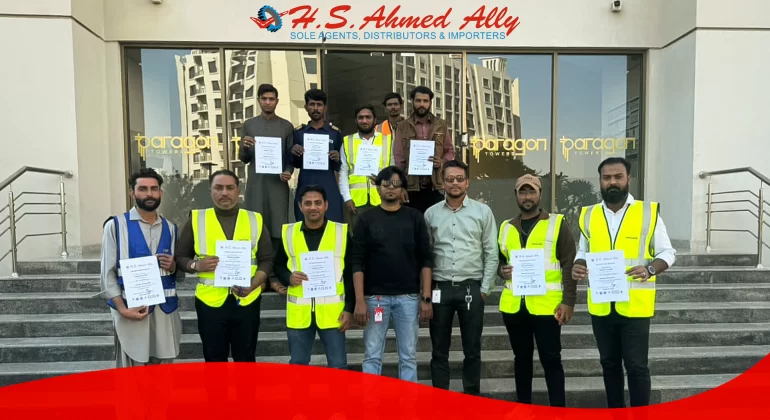
Post-training certificates: for compliance documentation
The ROI of Fire Safety Training
Some business owners hesitate because they see fire safety training as a cost. But think about it this way, the cost of one fire incident (lost equipment, downtime, legal fees, medical expenses, reputational damage) is almost always far greater than the cost of proper training.
Beyond finances, there’s the human cost. No business owner wants to be responsible for an employee losing their life or suffering serious burns because they weren’t prepared. Investing in fire safety training is investing in your people and that always pays off.
Insurance companies in Pakistan are also increasingly factoring in workplace safety measures when calculating premiums. A well-trained workforce with documented safety practices can even help you get better coverage at lower rates.
Final Thoughts
Fire safety training is one of those things that feels unnecessary — until you need it. And when you need it, you need it right now, with no time to learn.
For businesses in Pakistan, the stakes are high. Our industries are growing, our buildings are getting bigger, and our workplaces are getting more complex. The need for professional fire safety training in Pakistan has never been greater.
Don’t wait for an incident to be the wake-up call. Train your employees today. Make fire safety a core part of your workplace culture. Protect your people, your property, and your future.