
If you run a restaurant, hotel, or any commercial kitchen in Pakistan, you already know how hectic things can get. Hot oil, open flames, gas burners, and non-stop cooking all day long. It’s a recipe for great food. But it’s also a recipe for fire risk.
That’s exactly why kitchen fire suppression systems exist. They’re built to catch a fire the moment it starts and put it out before it spreads. In this guide, we’ll walk you through everything you need to know about kitchen fire suppression systems in Pakistan. No confusing jargon. Just simple, useful information to help you protect your business.
Why Commercial Kitchens Are a Fire Risk
Think about what happens in a busy kitchen every single day. Deep fryers running at high temperatures. Grills covered in grease. Gas stoves burning nonstop during peak hours. Exhaust hoods collecting oily residue over time.
Any one of these can turn into a fire hazard in seconds. A splash of oil on an open flame. A grease buildup that finally catches. A forgotten pan on the stove. It doesn’t take much.
And here’s the tricky part. Kitchen fires involving cooking oils and fats (called Class K fires) don’t behave like normal fires. Water won’t put them out. In fact, throwing water on a grease fire can make it worse and cause the flames to spread even faster. That’s why regular fire extinguishers often aren’t enough in a commercial kitchen setting.
This is where a proper kitchen fire suppression system becomes essential, not optional.
What Is a Kitchen Fire Suppression System?
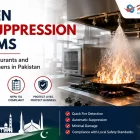
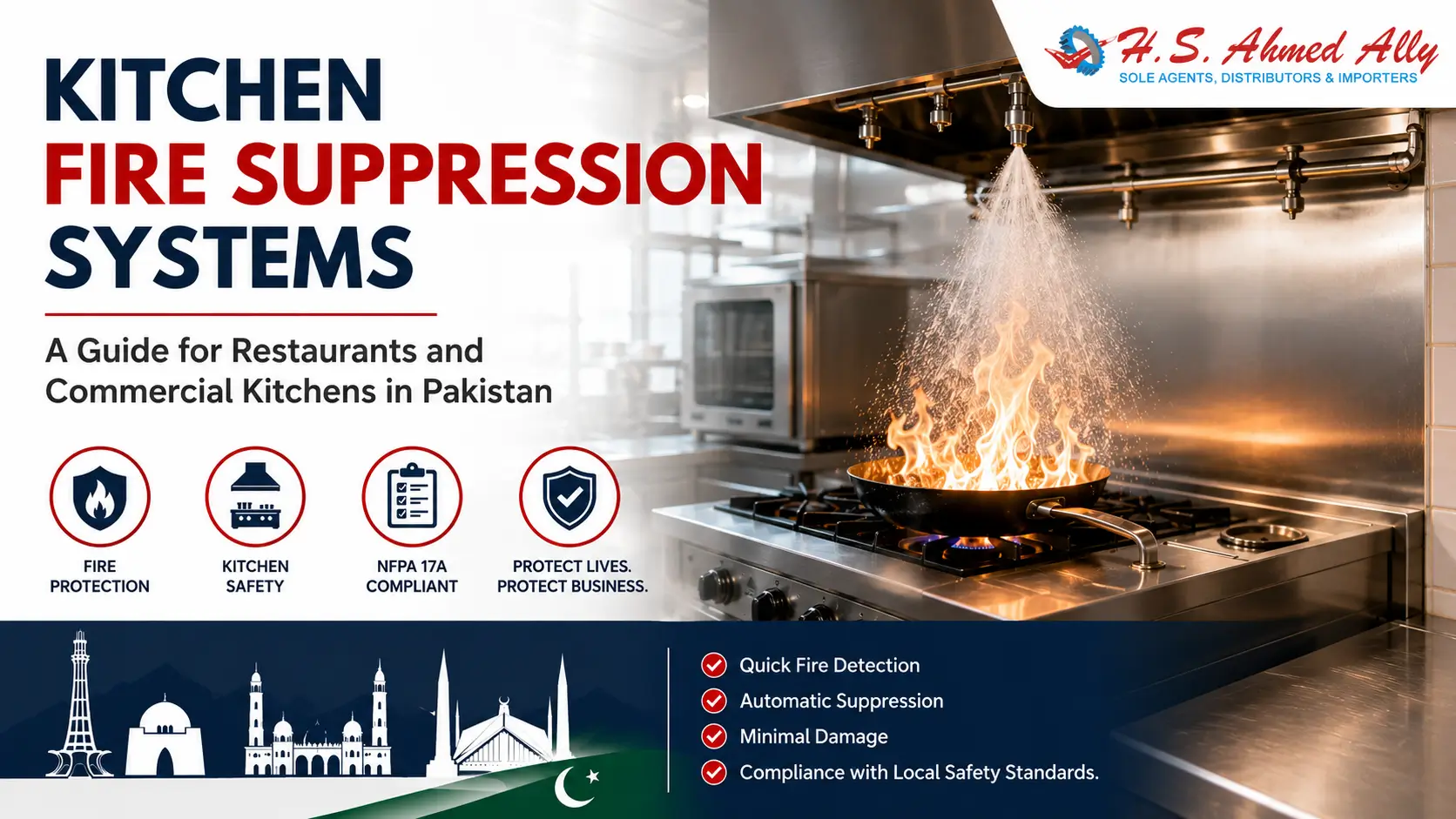
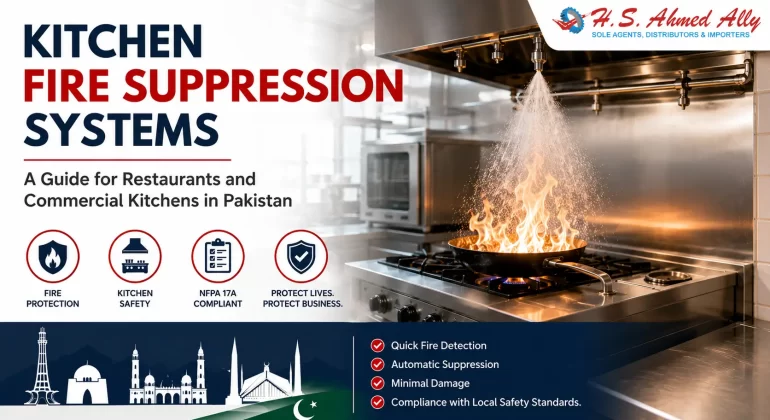
A kitchen fire suppression system is a fire safety setup designed specifically for commercial cooking areas. It’s usually installed above your cooking equipment, like fryers, grills, and stoves, right under the exhaust hood.
The system constantly monitors the cooking area. The moment it senses excess heat or flames, it automatically releases a special fire-suppressing agent. This agent smothers the fire and cools down the cooking surface at the same time, so the fire doesn’t reignite.
Most systems also shut off the gas or fuel supply to the cooking equipment automatically. This cuts off the fire’s fuel source and stops the danger from spreading further.
The best part? All of this happens automatically, within seconds. No one has to manually grab an extinguisher and run toward the fire. That speed is what makes these systems so effective at preventing small kitchen fires from turning into major disasters.
How Does a Kitchen Fire Suppression System Work?
Let’s break it down into simple steps:
1. Detection Heat sensors are installed directly above your cooking equipment. When the temperature rises beyond a safe limit, the system knows something’s wrong.
2. Activation The system triggers automatically. There’s no need for anyone to press a button or pull a lever, although manual activation is usually available too, just in case.
3. Suppression Nozzles positioned above the fryers, grills, and hoods release a wet chemical agent. This agent is specifically designed to fight Class K fires, the kind caused by cooking oils and fats.
4. Fuel Shutoff At the same time, the system cuts off gas or electricity to the cooking appliances. This stops the fire from getting more fuel.
5. Containment The suppressing agent also coats nearby surfaces, preventing the fire from spreading to the exhaust hood, ductwork, or filters, which are common places for kitchen fires to travel.
This whole process takes just seconds. That speed is what protects your staff, your customers, and your property.
Why Kitchen Hood Fire Systems Matter So Much in Pakistan
Pakistan’s food industry is booming. New restaurants, cafes, and hotels are opening up in Karachi, Lahore, Islamabad, and beyond almost every month. With that growth comes more responsibility for fire safety.
Here’s why investing in a proper kitchen fire suppression system just makes sense:
Kitchen fires spread fast. Grease fires can double in size every few seconds. A delay of even a minute can mean the difference between a small incident and a total loss.
Regular extinguishers aren’t built for grease fires. As we mentioned earlier, water-based extinguishers can actually make things worse. You need equipment specifically designed for Class K fires.
It protects your staff. Your kitchen team shouldn’t have to put themselves at risk trying to fight a fire manually. Automatic suppression takes that burden off their shoulders.
It protects your business. Fire damage doesn’t just mean repair costs. It means lost income while you’re closed, damaged reputation, and sometimes permanent closure. A functioning suppression system is one of the best investments you can make.
It helps with compliance. Many commercial building codes and insurance policies in Pakistan now expect commercial kitchens to have proper fire suppression in place. Having one installed can also make it easier to get insurance coverage, and sometimes even lower your premiums.
Where Are Kitchen Fire Suppression Systems Used?
You’ll typically find these systems installed in places like:
- Restaurant kitchens
- Hotel and resort kitchens
- Fast food chains
- Catering facilities
- School and hospital cafeterias
- Cloud kitchens and food courts
Basically, anywhere there’s high-volume cooking with fryers, grills, or open flames, a suppression system is a smart move.
What to Look for in a Good Kitchen Fire Suppression System
Not all systems are created equal. Here’s what you should check before choosing one for your kitchen:
Certification matters. Look for systems that meet recognized international standards. Certified systems have been tested to actually perform when it counts.
Proper design for your kitchen. Every kitchen layout is different. A good supplier will assess your specific cooking equipment, hood size, and layout before recommending a system. A one-size-fits-all approach doesn’t work well here.
Professional installation. These systems need to be installed correctly to work properly. This isn’t a DIY job. Get it done by trained technicians who understand fire suppression setups.
Regular maintenance and inspection. A fire suppression system is only useful if it’s actually working when you need it. Systems should be inspected and serviced periodically to make sure everything is in good condition, from the nozzles to the detection sensors.
Reliable after-sales support. Things can go wrong, or you might need a refill after activation. Choose a supplier who offers ongoing support, not just a one-time sale.
Kitchen Fire Suppression Systems from HS Ahmed Ally
At HS Ahmed Ally, we’ve been helping businesses across Pakistan stay protected for decades. As the authorized distributor of Firex fire safety solutions, we offer kitchen fire suppression systems that are specifically engineered for commercial cooking environments.
Our Firex Kitchen Hood System is a pre-engineered solution built to automatically detect and suppress fires in areas like fryers, grills, and cooking hoods. It’s designed to act fast, contain the fire, and shut down fuel sources, giving your kitchen the protection it needs during those critical first seconds of a fire.
Frequently Asked Questions (FAQs) About Kitchen Hood Fire Suppression Systems
Do small restaurants really need this, or is it just for large kitchens?
Fire doesn’t care about the size of your kitchen. Even small kitchens with a single fryer can experience serious grease fires. If you’re cooking with oil at high heat regularly, a suppression system is worth considering, regardless of your restaurant’s size.
Can these systems damage my kitchen equipment?
The wet chemical agents used in kitchen suppression systems are designed to be effective on grease fires while minimizing damage to surrounding equipment. Compared to the alternative of an uncontrolled fire, the protection far outweighs any minor cleanup afterward.
How long does installation take?
This depends on your kitchen size and layout, but most installations can be completed within a few days without major disruption to your operations.
Do I need to replace the system after it activates?
Not usually. Most systems can be recharged and reset by a professional technician after activation, so you won’t need a full replacement.
Is a kitchen fire suppression system required by law in Pakistan?
Requirements can vary depending on your city, building type, and local regulations. It’s always a good idea to check with local authorities or consult a fire safety expert to understand what applies to your specific business.
Final Thoughts
Running a commercial kitchen comes with enough daily challenges. Fire safety shouldn’t be something you have to worry about on top of everything else. A properly installed kitchen fire suppression system gives you peace of mind, knowing that if something does go wrong, your kitchen is ready to respond in seconds, not minutes.
At HS Ahmed Ally, we make it simple to get the right protection for your restaurant or commercial kitchen. From assessment to installation to ongoing maintenance, our team is here to help you every step of the way.
Ready to protect your kitchen? Get in touch with HS Ahmed Ally today for a consultation, and let’s find the right fire suppression system for your business.