
Picture a fire breaking out on a construction site, in a factory, or in a busy market. The fire brigade arrives fast. But their truck only carries a limited amount of water. Once that runs out, they need another source, and they need it right away.
That’s exactly what a fire hydrant system is for. It’s a fixed network of pipes, valves, and outlets that gives firefighters instant access to a large, steady water supply. Without one, even the fastest fire response can stall out in minutes.
In this guide, we’ll walk through how fire hydrant systems work, the difference between pillar hydrants and standpipes, the standards they need to meet, and what to think about before you install one. If you’re a facilities manager, a contractor, or a business owner in Pakistan trying to figure out what your building actually needs, this article is for you.
What Is a Fire Hydrant System?
A fire hydrant system is a network of underground or above-ground pipes connected to a water source. That water source could be a municipal supply, a storage tank, or a dedicated fire water reservoir. The pipes feed a series of outlets, called hydrants, placed around a site or inside a building.
When a fire breaks out, firefighters connect their hoses directly to the nearest hydrant. This gives them a continuous flow of water instead of relying only on the limited tank in their fire engine.
Most hydrant systems also include a fire pump. The pump boosts water pressure through the pipe network so there’s enough force to reach upper floors or cover a large industrial site. If your building doesn’t already have one, it’s worth reading our guide to choosing the right fire pump, since the pump and the hydrant system are designed to work together.
How Does a Fire Hydrant System Work?
At first glance, a hydrant system looks simple. But several components work together behind the scenes.
Here is the basic process.
1. Water is stored or supplied
The system starts with a suitable water source.
Depending on the project, this may involve a dedicated fire water tank, a permitted water supply, or another approved source.
Large buildings and industrial sites often need a dedicated fire water arrangement because the normal domestic water supply may not provide the flow and pressure needed for firefighting.
2. The fire pump provides pressure when needed
Where the available water supply does not provide the required pressure, a fire pump system helps move water through the fire protection network.
A pump may remain ready for an emergency while the system stays pressurized.
When pressure drops because a hydrant, hose connection, or other water-based firefighting system is opened, the pump arrangement can respond according to the system design.
HS Ahmed Ally supplies Firex fire pumps, including end-suction and split-case configurations.
3. Water travels through the fire main
The water moves through dedicated fire protection piping.
The piping connects the water supply to the hydrants, standpipes, landing valves, fire hose connections, and other outlets.
Valves are used to control sections of the network and manage water flow.
4. A hydrant or hose connection is opened
During a fire emergency, trained personnel connect a hose to the appropriate outlet.
For an outdoor hydrant, the hose is connected directly to the hydrant outlet.
For an indoor standpipe system, firefighters may connect to a landing valve or hose connection on the required floor.
5. Water flows through the hose and nozzle
Once the outlet valve is opened, pressurized water flows through the hose.
The nozzle then directs the water toward the fire.
The firefighting team controls the direction and type of water application based on the fire and site conditions.
Why Fire Hydrant Systems Matter
Pakistan’s cities are growing fast. Factories, warehouses, shopping malls, and high-rise buildings are going up in Karachi, Lahore, and Islamabad every year. More buildings and denser construction mean fires can spread faster, and public water pressure alone usually isn’t enough to fight a serious blaze.
A properly designed hydrant system gives you:
- A reliable water supply, even if the fire is large or lasts a long time.
- Faster firefighting response, since crews don’t have to wait for water tankers.
- Compliance with building codes, which is often required before a project gets its final approval.
- Lower risk to life and property, especially in factories, warehouses, and multi-storey buildings where a delay of even a few minutes can be costly.
This is why hydrant systems are a standard requirement for industrial plants, large commercial buildings, and government projects across Pakistan.
Pillar Hydrants: The Most Common Above-Ground Type
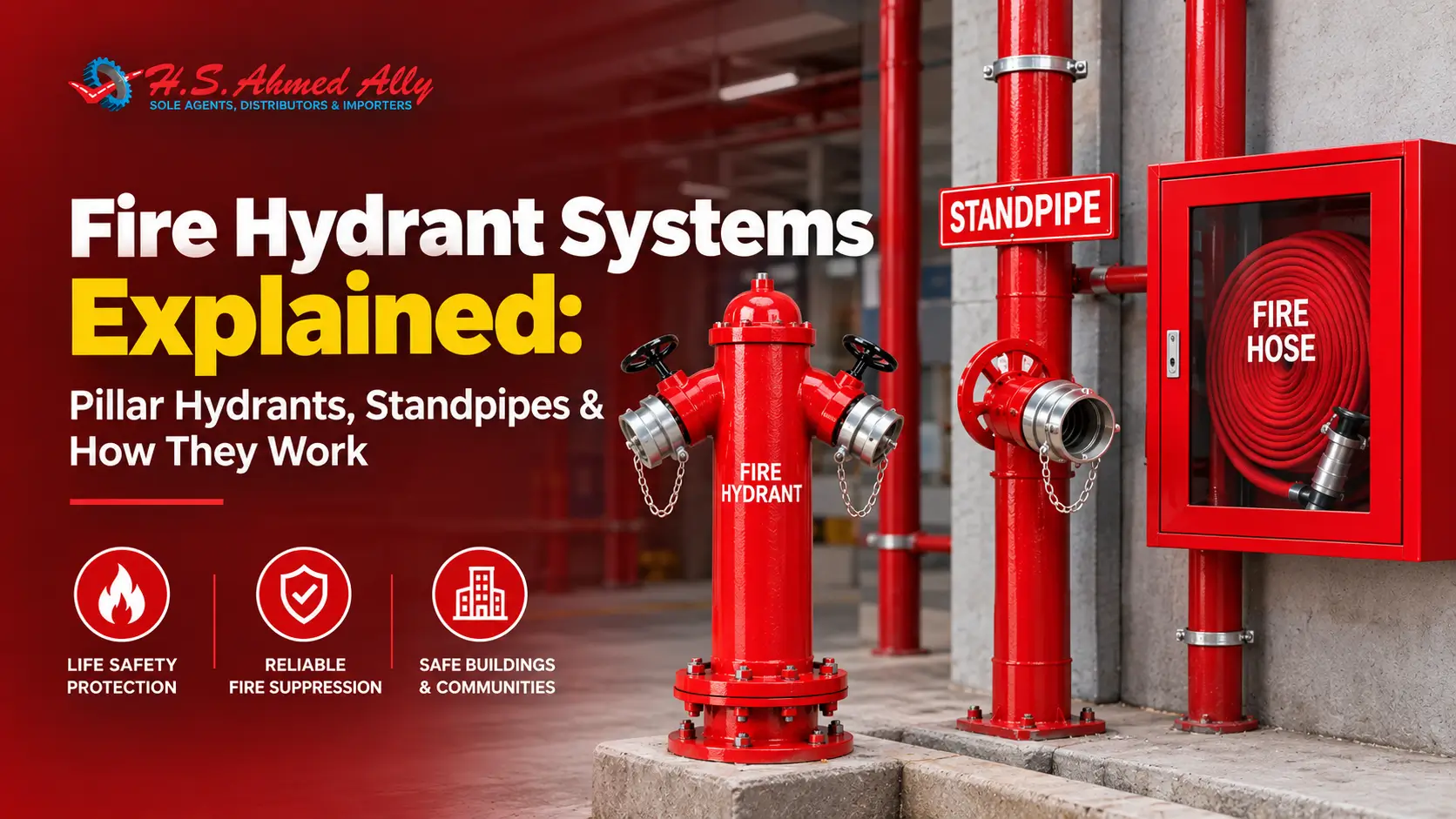
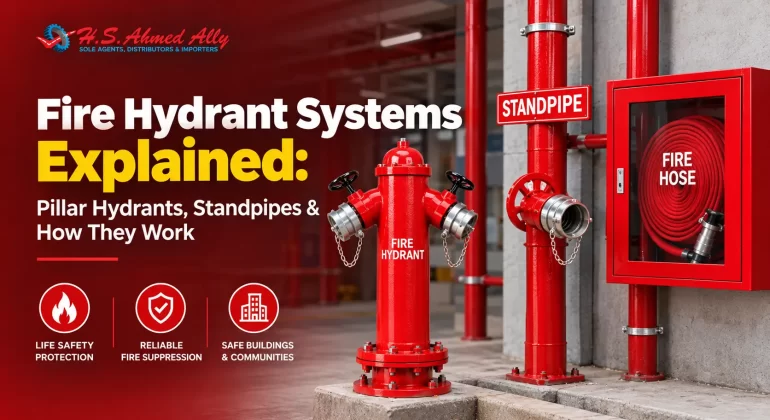
A pillar hydrant is the type most people picture when they hear the word “hydrant.” It’s a free-standing, above-ground unit, usually painted red, with one or more outlets where a fire hose can be connected.
Here’s how it works. The hydrant sits on top of a buried valve. When the valve opens, water rises through the pillar and out through the outlets. Most pillar hydrants used in Pakistan and the wider region follow a dry barrel design. This means the barrel above ground stays empty of water until the valve underground is opened. That protects the hydrant from damage if it’s hit by a vehicle, and it also means there’s no standing water inside the pillar to freeze or stagnate.
A few things to know about pillar hydrants:
- Bury depth refers to how deep the underground valve sits. Typical bury depths are 800mm or 1200mm, depending on the site and the pipe network it connects to.
- Outlet configuration usually includes a large pumper outlet (commonly 4 inches) for the fire engine, plus two smaller landing valve outlets (commonly 2.5 inches) for hand-held hoses.
- Certification matters. Look for hydrants tested to recognized standards like LPCB or UL/FM. These certifications confirm the hydrant has been independently tested for pressure rating, materials, and reliable operation.
We stock pillar hydrants built to these standards. You can see the current range on our fire hydrant systems page.
Standpipes: Hydrants for the Inside of a Building
A standpipe system does the same basic job as a pillar hydrant, but it’s built into a building rather than standing outside it. Think of it as a vertical pipe running up through a stairwell or a service shaft, with hose connection points on each floor.
Standpipes matter most in buildings where a hose run from an outdoor hydrant would be too long or too awkward. That includes:
- High-rise offices and apartment buildings
- Hospitals and hotels
- Large warehouses and factories with multiple floors or long floor plates
- Underground parking structures
Without a standpipe, firefighters would have to drag hose up several flights of stairs from the nearest outdoor hydrant, which costs precious time. With one, they simply connect a shorter hose at the nearest floor outlet.
Standpipes are generally classed as wet (always filled with pressurized water, ready to use) or dry (empty until the fire brigade pumps water in from outside). Wet standpipes give the fastest response, but they need a reliable pump and water supply to stay pressurized at all times.
Key Components of a Hydrant System
A complete hydrant system is made up of several parts working together. It helps to know what each one does:
Fire pump. Boosts pressure so water reaches every hydrant and standpipe outlet at the required flow rate, even at the top of a tall building or the far end of a large site.
Landing valves. The landing valves are found at each hydrant or standpipe outlet where a hose connects. They control the flow and let firefighters open or shut off water at that specific point.
Hose reel accessories. Many sites pair their hydrant system with hose reels for a faster, more flexible first response before the fire brigade even arrives. You can browse our fire hose reel accessories to see what’s commonly paired with a hydrant network.
Fire hose cabinets. These store hoses, nozzles, and valves at each hydrant point, keeping everything dry, protected, and easy to find in an emergency. Our fire hose reel cabinets covers mild steel and stainless steel options for different environments.
Breeching inlet. This is the connection point where the fire brigade’s pumping truck can feed extra water into the building’s standpipe system if needed.
Standards and Compliance in Pakistan
Fire hydrant systems in Pakistan are generally designed around a mix of local building codes and widely recognized international standards, including NFPA 14 (for standpipe and hose systems) and NFPA 24 (for private fire service mains). Certifications like LPCB and UL/FM are commonly specified on project drawings because they give engineers, consultants, and Civil Defence authorities confidence that the equipment has been independently tested.
If you’re working on a new project, it’s worth checking your approved building plan or consulting your fire safety engineer to confirm exactly which standard applies to your site. For a wider look at what Pakistani regulations expect from a building’s overall fire protection, our article on fire safety regulations in Pakistan is a useful starting point.
Choosing the Right Hydrant System for Your Site
Every site is different, so there’s no single “correct” hydrant setup. A few questions worth asking before you design or upgrade a system:
How big is the site? A large industrial plant may need multiple pillar hydrants spaced around the perimeter, while a single office building might only need one or two plus an internal standpipe.
How tall is the building? Taller buildings almost always need a standpipe system, since outdoor hydrants alone won’t get water to the upper floors fast enough.
What’s the water source? If municipal water pressure is unreliable in your area, you’ll need a dedicated fire pump and possibly a storage tank to guarantee supply during an emergency.
What does your local authority require? Civil Defence departments and building codes often set minimum requirements for hydrant spacing, flow rate, and certification. It’s far easier to design around these from the start than to retrofit later.
If you’re unsure where to begin, our team at HS Ahmed Ally can walk through your site requirements with you and recommend a system that fits both your building and your budget.
Keeping Your Hydrant System Ready
A hydrant system that hasn’t been maintained is a system you can’t rely on. Over time, underground valves can seize, outlets can corrode, and pressure can drop without anyone noticing until it’s too late.
A basic maintenance routine should include:
- Regular visual inspection of pillar hydrants for damage, rust, or blocked outlets
- Periodic flow testing to confirm pressure and output meet design requirements
- Checking that landing valves open and close smoothly
- Making sure hydrant locations stay clear of parked vehicles, stored materials, or landscaping
Most of this can be scheduled as part of a wider fire safety maintenance plan, alongside your extinguishers, alarms, and suppression systems.
Final Thoughts
A fire hydrant system is one of those things nobody thinks about until they need it. But when a fire does break out, it’s often the difference between a quick, controlled response and a situation that gets out of hand. Pillar hydrants and standpipes aren’t complicated once you understand what each part does and why it’s there.
If you’re planning a new project, upgrading an older site, or simply not sure whether your current setup meets today’s standards, it’s worth having a proper site assessment done. You can explore our full fire fighting and fire safety solutions.
HS Ahmed Ally’s fire-fighting range includes Firex hydrant systems, pillar hydrants, landing valves, hose-reel equipment, valves, fire pumps and related fire protection products for projects in Pakistan. Get in touch with our team directly for a recommendation tailored to your building.
FAQs
Q: What is the difference between a pillar hydrant and a standpipe?
A: A pillar hydrant is a free-standing, above-ground unit usually placed outside a building or around a site. A standpipe is a vertical pipe built inside a building, with hose connection points on each floor, used where an outdoor hydrant alone wouldn’t give firefighters fast enough access.
Q: Why are most pillar hydrants a “dry barrel” design?
A: A dry barrel hydrant stays empty of water above ground until the underground valve is opened. This protects it from freezing, reduces the risk of damage if it’s struck by a vehicle, and prevents standing water from sitting inside the pillar.
Q: Do I need a fire pump with my hydrant system?
A: In most cases, yes. A fire pump boosts water pressure through the pipe network so it reaches every hydrant and standpipe outlet at the flow rate required, especially in tall buildings or large sites where municipal pressure alone isn’t enough.
Q: What certifications should I look for in a fire hydrant?
A: Look for hydrants tested to recognized standards such as LPCB or UL/FM. These confirm the product has been independently tested for pressure rating, materials, and reliable performance under real fire conditions.
Q: How often should a hydrant system be inspected?
A: Hydrants and standpipes should be visually inspected regularly and flow-tested periodically to confirm they still deliver the required pressure and output. This is usually scheduled alongside maintenance for the rest of a building’s fire safety equipment.
Q: Where can I buy fire hydrant systems in Pakistan?
A: HS Ahmed Ally supplies certified fire hydrant systems across Pakistan, including Karachi, Lahore, and Islamabad. Contact us for a site assessment and recommendation.